

Advertisement
When a sliding door starts to jam, drag or refuse to close properly, it is often a sign that attention is overdue. While sliding door issues can appear complicated at first glance, many problems can be addressed efficiently with the right tools, basic know-how and timely action.
Why Prompt Sliding Door Fixes Matter
A faulty sliding door is more than a minor inconvenience. Left unattended, small issues can escalate into costly and disruptive problems for homeowners.
Security is the first concern. A door that does not latch or lock correctly significantly increases the risk of unauthorised entry. Industry reports consistently show that compromised doors are among the most common access points in residential break-ins.
Energy efficiency is another hidden cost. Gaps, worn seals or misaligned panels allow cooled or heated air to escape. In tropical climates like Singapore, this can lead to noticeably higher electricity usage, as air-conditioning systems work harder to maintain indoor comfort.
Safety is equally important. A door that sticks or resists opening may pose serious risks during emergencies when quick access or exit is required. Water intrusion is also a concern. Deteriorated seals can allow rainwater to seep indoors, leading to moisture damage, mould growth and long-term structural issues that are expensive to correct.
Basic Tools for Sliding Door Maintenance
Most common sliding door issues do not require specialised equipment. Many homeowners already have the essentials on hand.
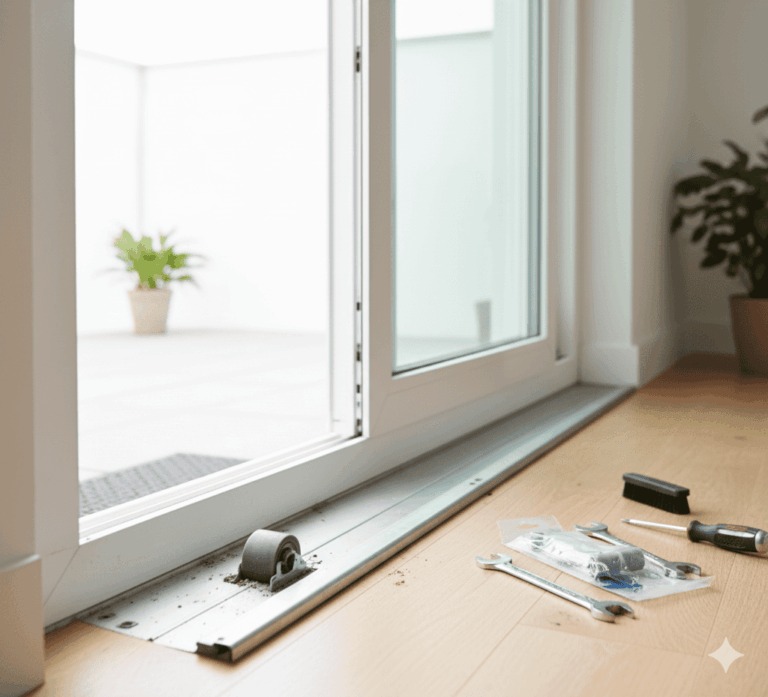
A basic toolkit should include Phillips and flat-head screwdrivers, an adjustable wrench, pliers and a rubber mallet for gentle alignment work. A vacuum cleaner, cleaning cloths and a silicone-based lubricant are also useful. For many households, assembling these items costs relatively little.
Certain repairs require additional components. Replacement rollers are commonly needed and should match the door’s make and size. When in doubt, bringing the old roller to a hardware supplier helps ensure compatibility.
Weather seal replacement kits, a spirit level and a putty knife for removing old seals are also helpful. Safety gloves and protective eyewear are strongly recommended when handling glass panels or lifting heavy door frames.
A simple yet effective habit is to photograph each step before removing parts. These reference images can save time and frustration during reassembly.
Common Sliding Door Issues in Homes
Difficulty sliding is the most frequent complaint and often the easiest to resolve. In many cases, accumulated dust, hair and debris in the track are responsible. Thorough vacuuming, wiping the track clean and applying a silicone lubricant can restore smooth movement in minutes.
Worn or damaged rollers are another common cause. As these components bear the full weight of the door, they gradually deteriorate. Signs include uneven movement, scraping sounds or a door that sags within the frame. Replacing rollers typically requires removing the door panel and may take one to two hours for first-time DIY attempts.
Handles and locking mechanisms also experience regular wear. Fortunately, most sliding door hardware is standardised, making replacements relatively straightforward. Updating these components improves both convenience and household security.
Deteriorated weather seals often go unnoticed until drafts or moisture become apparent. These seals can harden or crack over time due to heat and exposure. Replacing them is a simple task that can improve comfort and reduce energy loss.
Glass concerns vary in severity. Surface scratches are usually cosmetic, but cracks present safety risks and should be addressed promptly. Condensation trapped between double-pane glass panels indicates seal failure and typically requires professional attention.
Preventive Care for Long-Term Performance
Routine maintenance is the most effective way to extend the life of a sliding door.
Monthly upkeep can be completed in minutes. Vacuum the track, wipe surfaces clean and visually inspect for early signs of wear.
Every few months, apply silicone lubricant to rollers and tracks, tighten loose screws and test door movement for unusual sounds or resistance. Check weather seals for gaps or brittleness.
Annual maintenance is more thorough. Removing the door allows for deep cleaning of the track, careful inspection of rollers and precise alignment adjustments. Replacing aging seals at this stage can prevent future issues.
Good habits also matter. Keep the surrounding area free from debris, trim nearby plants and avoid forceful closing. After heavy rain, check for signs of water ingress around the frame.
Repair or Replace: Making the Right Choice
For doors that are relatively new and structurally sound, repairs are often the sensible option. Single issues such as worn rollers, loose hardware or aging seals can usually be addressed cost-effectively.
Replacement becomes the better choice when multiple issues occur simultaneously or when the door is nearing the end of its service life. Warped frames, persistent alignment problems and repeated repairs are indicators that a full upgrade may be more economical in the long run.
A practical guideline is to compare costs. If repair expenses approach half the price of a new door, replacement is often the wiser investment. Newer models also offer improved insulation, smoother operation and enhanced durability.
When to Seek Professional Help
While many sliding door tasks are suitable for DIY efforts, some situations call for expert involvement.
Broken or cracked glass poses safety risks and requires specialised handling. Doors that have fully derailed or frames showing signs of distortion or corrosion should be assessed by trained technicians. Security concerns, such as doors that fail to lock properly, should also be addressed promptly by professionals.
If repeated DIY attempts fail to resolve the issue, it may indicate an underlying structural or alignment problem that requires specialised tools and experience.
Understanding when to act independently and when to seek assistance helps homeowners protect both their property and their peace of mind.


Advertisement


